Ground-Level Signs That Complement Property Architecture
Monument Signs in Minot for Professional Campuses and Business Parks Requiring Permanent Entry Identification
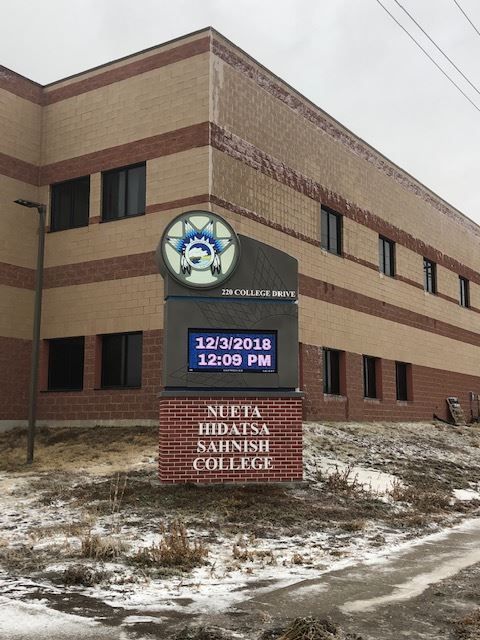
Professional office buildings, medical campuses, and residential community entrances use monument signs instead of pole-mounted structures when property aesthetics and neighborhood character matter as much as visibility, or when zoning restrictions limit sign height to ground-level installations. Knockout Design constructs monument signs using brick, stone veneer, formed concrete, or composite panel materials that match your building's exterior finishes, creating a cohesive appearance where the sign looks like a permanent architectural feature rather than an afterthought addition. Optional LED illumination keeps the sign readable after dark while maintaining the refined appearance that sets monument signs apart from standard commercial signage.
Monument signs are low-profile structures built on concrete foundations, with masonry or framed bases supporting a sign face that displays your business name, logo, or community identification. The construction process begins with a poured concrete footing that extends below frost depth to prevent heaving during freeze-thaw cycles, then builds up the monument structure using materials chosen to withstand moisture exposure and temperature extremes. Face panels attach to the monument structure using concealed fasteners, and LED modules mount inside the cabinet or behind the face panel depending on whether you choose internal cabinet illumination or halo-lit dimensional letters.
Request an on-site consultation to review monument placement options and select materials that coordinate with your existing property architecture.
What Proper Monument Construction Requires
Monument signs built with brick or stone veneer require waterproof backing materials and proper flashing details because water that penetrates behind the veneer during rain or snowmelt will freeze during winter nights, expanding and pushing the veneer away from the backing structure. Knockout Design installs a weather-resistant barrier behind all masonry veneer, uses through-wall flashing at the monument base to direct water outward, and ensures that weep holes at the bottom of the veneer cavity allow trapped moisture to drain rather than accumulating behind the brick or stone.
After installation completes, the monument sign provides property identification that looks permanent and intentional rather than temporary or commercial, which matters for office parks and professional campuses where the entry sign communicates organizational stability and attention to detail before clients ever reach your building. The ground-level positioning works particularly well for properties with mature landscaping or residential adjacency, where tall pole signs would look out of scale or create neighborhood opposition during the permitting process.
Illuminated monuments use either internal LED modules that backlight a translucent face panel, or external spotlight fixtures that wash light across an opaque face surface. Internal illumination creates even brightness across the entire sign face but requires a deeper monument structure to house the cabinet and LEDs, while external lighting produces a more architectural appearance but needs careful fixture placement to avoid creating shadows from dimensional letters or logo elements.
What Business Owners Usually Ask About Monument Signs
Property developers and business owners in Minot frequently ask about material durability and how these signs perform with minimal maintenance over decades of exposure.
What material options work best for monument sign bases in North Dakota?
Brick veneer over steel framing provides traditional appearance with good durability, while composite panel systems offer more color and texture options with lighter weight that reduces foundation requirements, and formed concrete creates a modern look with the longest lifespan but higher initial cost due to custom formwork and finishing labor.
How does frost heave affect monument sign foundations?
Concrete footings poured below the frost line—approximately four feet deep in the Minot area—rest on undisturbed soil that doesn't expand during freezing, preventing the vertical movement that cracks masonry veneer or misaligns sign faces on shallow foundations that move with seasonal freeze-thaw cycles.
Why do some monument signs include landscape integration?
Planting beds built into the monument structure soften the appearance and help the sign blend with surrounding landscaping, which is often required by homeowner associations or municipal design standards in residential-adjacent commercial zones where stark commercial signage would conflict with neighborhood aesthetics.
When should illumination be added to a monument sign?
Properties with significant after-dark traffic or businesses that operate evening hours need illumination for visibility, while daylight-only operations or residential community signs may skip lighting to reduce installation cost and eliminate ongoing electrical expenses.
What distinguishes a high-quality monument sign from a basic installation in Minot?
Quality construction uses through-bolted connections rather than adhesive-mounted panels, includes proper flashing and drainage details to prevent water damage, matches mortar and material colors precisely to adjacent buildings, and sizes the foundation to prevent settling or movement over the structure's expected lifespan.
Knockout Design coordinates material selection, structural engineering, and installation to deliver a monument sign that meets local codes and matches your property's architectural standards. Call (701) 833-6257 to begin the design process for your monument sign project.