
Roadside Signs Engineered for North Dakota Wind
Pylon and Pole Signs in Minot for Properties Requiring Visibility from Highway-Speed Traffic
A shopping center located two hundred feet back from the roadway loses customer traffic because drivers traveling at forty-five miles per hour can't read ground-level signs in time to make the turn into the parking lot. Knockout Design engineers freestanding pylon and pole signs that elevate your business identification fifteen to thirty feet above grade, creating the sight line distance needed for highway-speed traffic to read your sign, process the information, and execute a safe turn. These signs use structural steel poles anchored in concrete footings sized according to local wind load calculations, with LED-illuminated cabinet faces that remain readable during both day and night conditions across all seasons.
Pylon signs are tall structures with one or more cabinet faces mounted on a visible support framework, while pole signs use a single central column that creates a cleaner appearance by hiding the support structure inside the sign cabinet. Both styles accommodate multi-tenant configurations where multiple businesses share the sign structure, with individual cabinet sections allocated to each tenant. The engineering process includes soil analysis to determine footing depth and width, wind load calculations based on sign height and face area, and structural design that meets North Dakota's building codes for freestanding signs in commercial zones.
Schedule a property evaluation to review sight line requirements and identify the optimal sign height and placement for your specific roadway conditions.
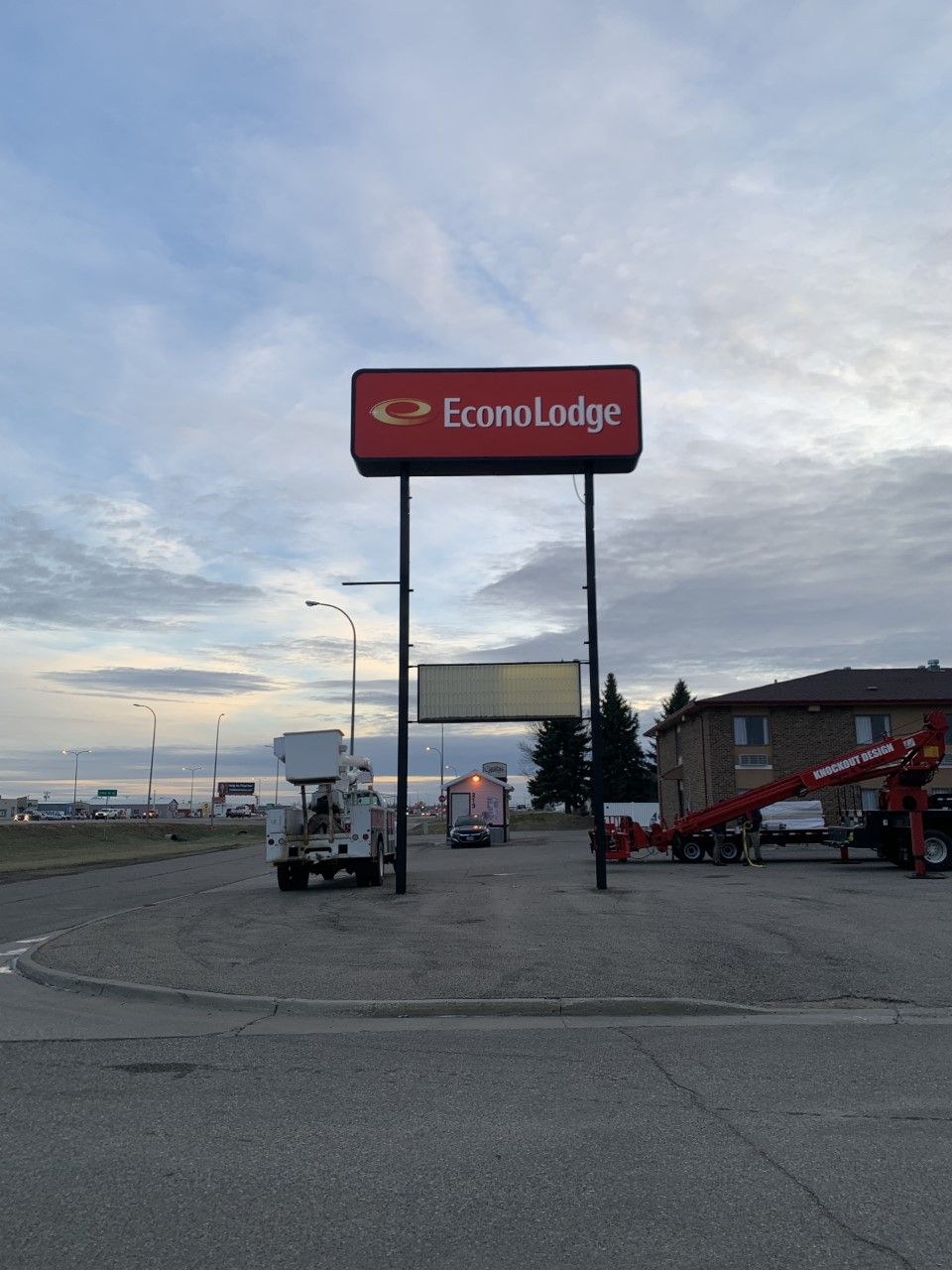
Why Sign Height and Footing Design Determine Durability
Taller signs experience greater wind force because the lever arm between the sign face and the ground magnifies the lateral load on the foundation, which is why a thirty-foot pylon requires a concrete footing that extends below the frost line—typically four feet deep in the Minot area—and spreads the load across a base wider than the pole diameter. Knockout Design calculates the footing dimensions using the sign's total face area, height above grade, and the maximum wind speed specified in local building codes, then pours a reinforced concrete footing with rebar cages that tie the vertical pole to the foundation mass.
Once installed, your property becomes identifiable from distances that ground-level monument signs can't achieve because the elevated position places your business name above the visual clutter of parked cars, landscaping, and other ground-level objects that block sight lines. The LED illumination inside each cabinet face activates automatically at dusk and provides consistent brightness that makes your sign as readable at midnight as it is at noon, addressing the visibility gap that non-illuminated signs create during evening hours when many retail businesses see peak traffic.
Multi-tenant configurations use stacked or side-by-side cabinet arrangements where each business gets a defined space within the overall sign structure, with individual electrical connections that let each tenant control their section independently. This approach splits the structural cost across multiple businesses while maintaining the height and visibility that individual ground signs can't provide.
Answers to Frequent Questions About Tall Signage
Property owners in Minot often ask about the permitting process and how these signs perform during severe weather and extreme cold.
What determines the maximum height allowed for a pylon sign?
Local zoning codes specify height limits based on property use and distance from the roadway, with commercial highway corridors typically allowing taller signs than residential-adjacent properties, and setback distances from the property line affecting how visible a sign can be at the maximum permitted height.
How does wind load calculation affect sign design in Minot?
Engineers use the local wind speed data to calculate lateral force on the sign face, then size the pole diameter and wall thickness to resist bending, and design the footing to prevent the structure from overturning—signs with larger face areas or greater heights require proportionally larger poles and footings.
Why do some pylon signs use a single pole while others have a visible frame?
Single-pole designs create a cleaner appearance but require larger diameter poles to achieve the same structural strength as multi-column pylon frames, making single-pole signs more expensive when face width exceeds eight to ten feet.
When should LED modules be replaced in pole sign cabinets?
Most commercial-grade LED modules last fifty thousand to seventy thousand hours of operation, which translates to roughly ten to twelve years of nightly use before light output drops to eighty percent of original brightness, at which point replacement prevents the dim appearance that makes signs look unmaintained.
What maintenance does a pylon sign require over its lifespan?
Annual inspection checks for loose fasteners, water intrusion around cabinet seals, and LED function, with structural components typically requiring no maintenance beyond periodic paint touch-up on the pole surface to prevent corrosion in areas where the finish has been damaged.
Knockout Design manages the engineering, permitting, fabrication, and installation sequence to deliver a code-compliant pylon or pole sign that maximizes your property's roadside visibility. Contact (701) 833-6257 to discuss sign height options and multi-tenant configurations for your specific site.